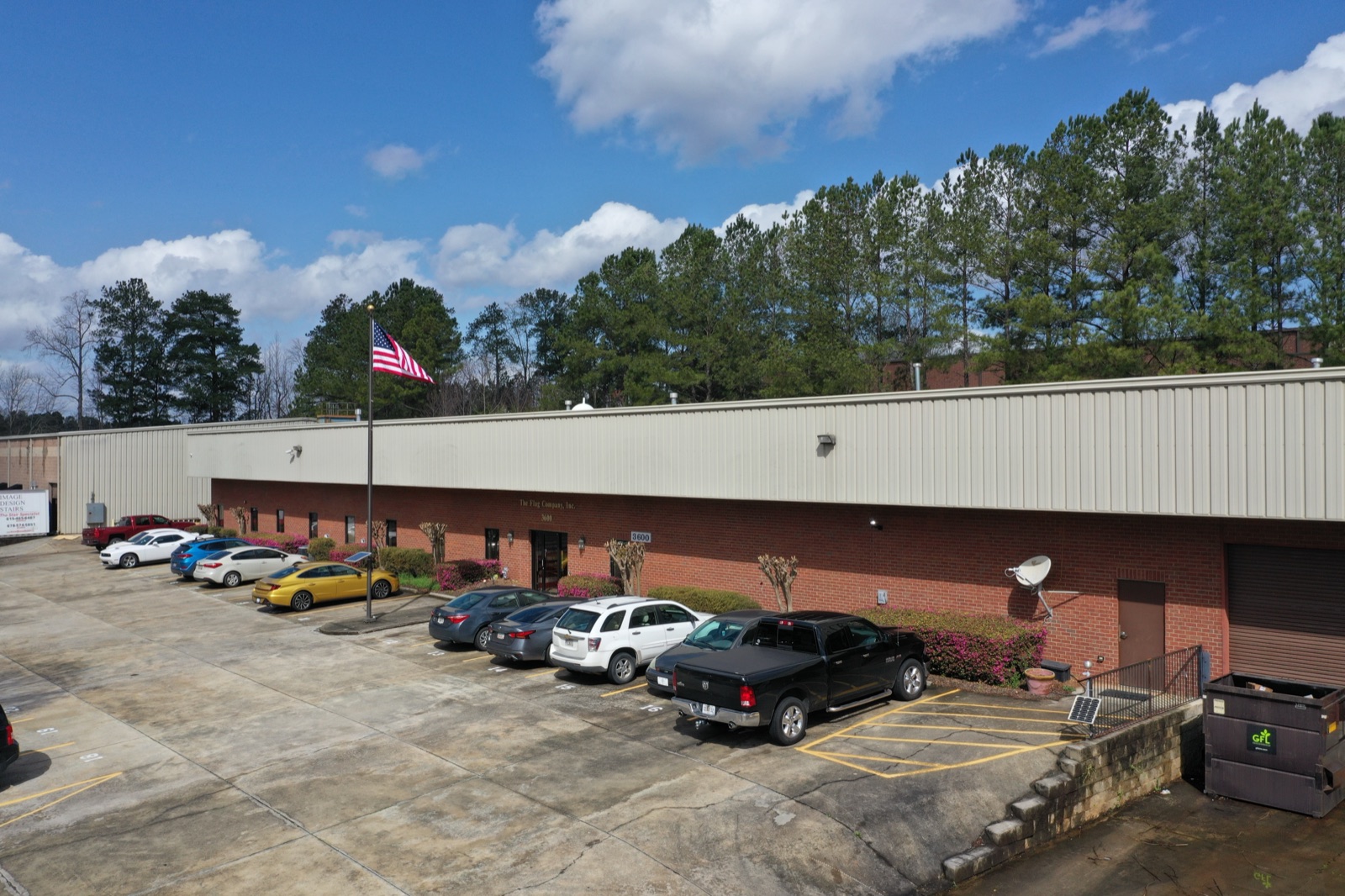
A commercial flagpole’s wind rating comes from three layers of standards. NAAMM FP 1001-07 is the engineering standard that rates the pole to a maximum wind speed. ASCE 7 is the standard that sets the design wind speed at your location. And your local building code, enforced by the Authority Having Jurisdiction (AHJ), decides which ASCE edition applies and can require a higher speed than the national map. Get all three right and the pole meets code. Miss the third and a pole that looks compliant on paper can fail the local requirement.
Key Takeaways
- Two engineering standards set a flagpole’s wind rating: NAAMM FP 1001-07 (the rating method, tiers of 85 to 170 mph) and ASCE 7 (the design wind speed for your site).
- ASCE 7 is revised over time (editions 7-05, 7-10, 7-16, 7-22). The edition changes the wind speed number for the same address, so the edition matters as much as the map.
- ASCE 7 publishes ultimate (strength-design) speeds, while NAAMM flagpole ratings use the older ASD basis. Convert with VASD = Vultimate × √0.6 (× 0.7746): a 115 mph map speed is a 90 mph flagpole.
- The AHJ, your local building department, decides which ASCE edition applies. Some jurisdictions set a higher design wind speed than the national map: Miami-Dade County uses 175 mph, the Texas windstorm zone 140 to 150 mph, and New York City sets its own.
- FlagCo’s Wind Speed Tool returns ASCE 7-10, ASCE 7-22, and any local override for a zip code, then recommends the strictest NAAMM rating that applies. We know of no other flagpole tool that shows all three.
- All ASCE 7 wind speeds are a 3-second gust at 33 ft (Risk Category II for typical flagpoles), and every “with flag” NAAMM rating assumes a nylon flag.
What’s in this guide
- What standards set a flagpole’s wind rating?
- What are the NAAMM FP 1001-07 wind ratings?
- What is ASCE 7, and why do the editions matter?
- Why the map says 115 mph when the pole is rated 90
- What is an AHJ, and why can it override the map?
- Which ASCE edition does my project use?
- How FlagCo’s tool shows all three
- Frequently asked questions
What standards set a flagpole’s wind rating?
A commercial flagpole’s wind rating comes from two engineering standards working together. NAAMM FP 1001-07, published by the National Association of Architectural Metal Manufacturers, is the standard that designs and rates an aluminum flagpole to a maximum wind speed. ASCE 7, from the American Society of Civil Engineers, is the standard that tells you the design wind speed at a given location. NAAMM sets the rating; ASCE 7 sets the target the rating has to meet.
A third layer sits on top: the building code your jurisdiction has adopted, enforced by the AHJ. The code points to a specific ASCE 7 edition and, in some places, adds a local wind speed requirement. So a complete wind rating answer is always three parts: the rating method, the design wind speed, and the code that ties them to your address.
| Standard | What it governs | Published by |
|---|---|---|
| NAAMM FP 1001-07 | Flagpole design and the wind rating method for aluminum poles | NAAMM |
| ASCE 7 | Basic (design) wind speed by location and risk category | ASCE |
| Building code (IBC and state or local amendments) | Which ASCE edition applies, plus any local wind speed override | ICC, adopted by the AHJ |
One detail matters for how the industry talks about wind ratings: NAAMM FP 1001-07 was published against the ASCE 7-05 wind map, which is built on a hurricane simulation model from 1998. That older map is the baseline most flagpole manufacturers still reference. FlagCo poles are extruded 6063-T6 aluminum per ASTM B 221 and rated to NAAMM FP 1001-07, but we design against newer ASCE data, which is where the editions come in below.
What are the NAAMM FP 1001-07 wind ratings?
NAAMM FP 1001-07 rates flagpoles at eight standard wind speeds: 85, 90, 100, 110, 120, 130, 150, and 170 mph. FlagCo manufactures commercial poles across that full range in heights from 15 to 80 ft. Each rating is the maximum 3-second gust the pole is engineered to withstand with a nylon flag of the recommended size flying from it.
| NAAMM rating | Where it typically applies |
|---|---|
| 85 mph | Interior Midwest, Northern Plains, Mountain West |
| 90 mph | Interior Southeast, Central states, Pacific Northwest |
| 100 mph | Mid-Atlantic, portions of Texas and the Southeast |
| 110 mph | Coastal Mid-Atlantic, Western Gulf Coast |
| 120 mph | Eastern Gulf Coast, Outer Banks, coastal New England |
| 130 mph | Southern Florida, Louisiana coast, hurricane corridors |
| 150 mph | Southeast Florida, coastal Carolinas, Mississippi coast |
| 170 mph | South Florida coast, Florida Keys, extreme hurricane zones |

Built to hold the flag in real wind
The rating is not just the pole. It is the pole plus a flag catching wind at the top, which is where the load is highest.
- Ratings85 to 170 mph
- Heights15 to 80 ft (manufactured)
- StandardNAAMM FP 1001-07
- Flag basisNylon, recommended size
What is ASCE 7, and why do the editions matter?
ASCE 7 is the standard that maps the design wind speed for every location in the United States. It is revised roughly every six years, and each edition can change the wind speed for the same site. The editions in circulation today are 7-05, 7-10, 7-16, and 7-22. A flagpole specified against 7-05 and one specified against 7-22 can end up with different ratings at the same address.
The reason is better data, not moving goalposts. Each edition folds in more hurricane records, better instrumentation, and improved modeling of how storms weaken inland. ASCE 7-10 also changed the design basis from allowable-stress “service” wind speeds to “ultimate” strength-design speeds, which is why 7-10 numbers look higher than 7-05 numbers even when the underlying risk is similar. The measurement convention stays constant across editions: a 3-second gust at 33 ft above ground. What moved is the return period behind the number, from the 50-year basis of 7-05 to a 700-year return period for a typical Risk Category II flagpole under 7-10 and later.
| ASCE 7 edition | Referenced by | What changed |
|---|---|---|
| 7-05 | IBC 2006, 2009 | Service-level wind speeds; the 1998 hurricane map inside NAAMM FP 1001-07 |
| 7-10 | IBC 2012, 2015 | Ultimate wind speeds; updated hurricane data and inland-decay modeling |
| 7-16 | IBC 2018, 2021 | Refined coastal and inland contours |
| 7-22 | IBC 2024 | Current edition; further map refinement (adds tornado loads for Risk Category III and IV only) |
A newer edition does not automatically mean a higher rating. Depending on the location, ASCE 7-22 can raise or lower the design wind speed compared with 7-10. That is exactly why we show both values side by side rather than assuming the newest map is always the highest. The tornado-load provisions added in 7-22 apply only to Risk Category III and IV structures, not to typical Risk Category II flagpoles, so they do not change a standard commercial flagpole rating.
Why does the ASCE map say 115 mph when the flagpole is rated 90?
Because the two numbers are measured on different bases. ASCE 7 publishes ultimate (strength-design) wind speeds. NAAMM FP 1001-07 flagpole ratings are set on the older allowable-stress (ASD) basis. Converting between them is fixed arithmetic, not a judgment call: VASD = Vultimate × √0.6, or × 0.7746.
This is the most common specification error we see. Someone reads a raw ultimate value off the ASCE Hazard Tool, sees 115 mph, and asks for a 115 mph flagpole. NAAMM has no 115 tier, so the quote comes back at 120 mph when the correct answer is 90. That is a heavier pole, a larger foundation, and a higher price for no code benefit.
| ASCE 7 ultimate map speed | ASD-basis equivalent | NAAMM flagpole rating |
|---|---|---|
| 115 mph | 89 mph | 90 mph |
| 130 mph | 101 mph | 110 mph |
| 150 mph | 116 mph | 120 mph |
| 170 mph | 132 mph | 150 mph |
| 175 mph (Miami-Dade HVHZ) | 136 mph | 150 mph |
The rating is the next NAAMM tier at or above the converted speed, and the tiers are discrete (85, 90, 100, 110, 120, 130, 150, 170). That is why several different map speeds land on the same pole, and why a larger number on the map does not automatically mean a larger pole.
Always ask which basis a wind speed is on
When a specification, a competitor’s cut sheet, or a building department hands you a wind speed, confirm whether it is ultimate or ASD before comparing it to a flagpole rating. A 150 mph ultimate requirement and a 150 mph NAAMM rating are not the same requirement. FlagCo’s Wind Speed Tool prints both bases for every location so the comparison is like for like.
What is an AHJ, and why can it override the national map?
The Authority Having Jurisdiction (AHJ) is the local government body, usually your city or county building department, that adopts and enforces the building code where your flagpole will stand. The AHJ decides which ASCE 7 edition applies, and in some regions it sets a design wind speed different from, and often higher than, the national ASCE map. A pole that meets the national map can still miss local code.

The national ASCE map is a floor, not the final word. Coastal and high-wind jurisdictions have documented local wind speeds that reflect terrain and hurricane risk the national contours smooth over. Below are the local wind speeds FlagCo’s Wind Speed Tool currently flags, drawn from each jurisdiction’s adopted code.
| Jurisdiction | Local design wind speed (ultimate) | Code provision |
|---|---|---|
| Miami-Dade County, FL | 175 mph | Florida Building Code Section 1620.2 (HVHZ) |
| Broward County, FL | 170 mph | Florida Building Code Section 1620.2 (HVHZ) |
| Collier County, FL | 170 mph | Florida Building Code R301.2(7) |
| Texas windstorm zone (Tier I) | 150 mph | TDI 28 TAC Ch. 5, Subchapter E |
| Texas windstorm zone (Tier II) | 140 mph | TDI 28 TAC Ch. 5, Subchapter E |
| New York City | 120 mph | NYC Building Code Section 1609.3 |
These are Risk Category II ultimate design wind speeds as set or enforced by the jurisdiction, so convert them to the ASD basis before comparing them to a NAAMM rating. Miami-Dade’s 175 mph lands on a 150 mph pole. Special Wind Regions, the areas ASCE marks with dashed borders for mountains, gorges, and ocean promontories, are a related case: the national map warns that local speeds may run higher and hands the final value back to the AHJ.
No national database aggregates these local overrides
The ASCE Hazard Tool, the standard reference for design wind speeds, states plainly that it does not report the criteria each jurisdiction has legally adopted. There is no single national source for local wind speed overrides. That gap is exactly why a national map alone is not enough, and why we built the local-code layer into our tool by hand.
Which ASCE edition does my project use?
Your AHJ decides. The ASCE 7 edition that governs your flagpole is set by the building code your jurisdiction has adopted, not by the newest edition ASCE has published. As a rule of thumb, IBC 2012 and 2015 reference ASCE 7-10, IBC 2018 and 2021 reference 7-16, and IBC 2024 references 7-22. Code adoption rolls out state by state, so two projects in different states can sit on different editions in the same calendar year.
This is the practical reason we do not pick a single edition and hide the rest. An architect writing a spec in a jurisdiction on 7-16 needs a different number than a contractor pulling a permit in a jurisdiction that just moved to 7-22. Always confirm the adopted edition and any local override with the building department before you finalize a rating. If you are writing the flagpole into a project manual, the FlagCo Spec Builder generates CSI Section 107500 language you can set to your project’s wind speed.
How FlagCo’s Wind Speed Tool shows all three
FlagCo’s Wind Speed Tool returns three wind speeds for any US zip code: the ASCE 7-10 value, the ASCE 7-22 value, and any local AHJ override that applies. It converts each to a NAAMM FP 1001-07 rating and recommends the strictest one for your site. We built it this way because no other flagpole tool we know of surfaces all three layers in a single lookup.

Under the hood it carries all 41,375 US zip codes with both the 7-10 and 7-22 wind speeds, so you see how the edition changes your number instead of guessing. It checks 751 zip codes across the jurisdictions in the table above (New York City, Miami-Dade, Broward, and Collier counties, and the Texas windstorm zone) for a local requirement, and cites the exact code section when one applies. It flags ASCE Special Wind Regions. The local-code coverage is a starting set that we expand over time.
The reason this exists is simple. FlagCo is a manufacturer, and the national tools stop at the ASCE map. We build and ship these poles, so we built the missing layer: the local code that actually governs the job. Enter your address, compare 7-10 and 7-22, see any local override, and take the recommended NAAMM rating straight into a spec or a quote.
Frequently asked questions
Is ASCE 7-10 or ASCE 7-22 the correct standard for a flagpole?
Does a newer ASCE edition always mean a higher wind rating?
What is the difference between the design wind speed and the flagpole rating?
What wind rating do I need for a flagpole in a hurricane zone?
Why do FlagCo’s “with flag” ratings assume a nylon flag?
Does FlagCo manufacture poles for the highest wind zones?
Sources
- NAAMM FP 1001-07, Guide Specifications for Design of Metal Flagpoles, National Association of Architectural Metal Manufacturers (naamm.org)
- ASCE 7, Minimum Design Loads and Associated Criteria for Buildings and Other Structures, and the ASCE Hazard Tool (ascehazardtool.org)
- International Building Code, International Code Council (iccsafe.org)
- Florida Building Code, 2023 Eighth Edition, Section 1620 (High Velocity Hurricane Zones)
- Texas Department of Insurance, windstorm building code, 28 TAC Chapter 5 (tdi.texas.gov)
- New York City Building Code, 2022 edition, Section 1609.3 (basic design wind speed)
Get the right wind rating for your site
Look up the ASCE 7-10, ASCE 7-22, and local code wind speed for your address, then take the matching NAAMM rating straight into a quote. Veteran-owned, built in Acworth, Georgia, shipped direct.